
When the Flowers Stop Coming
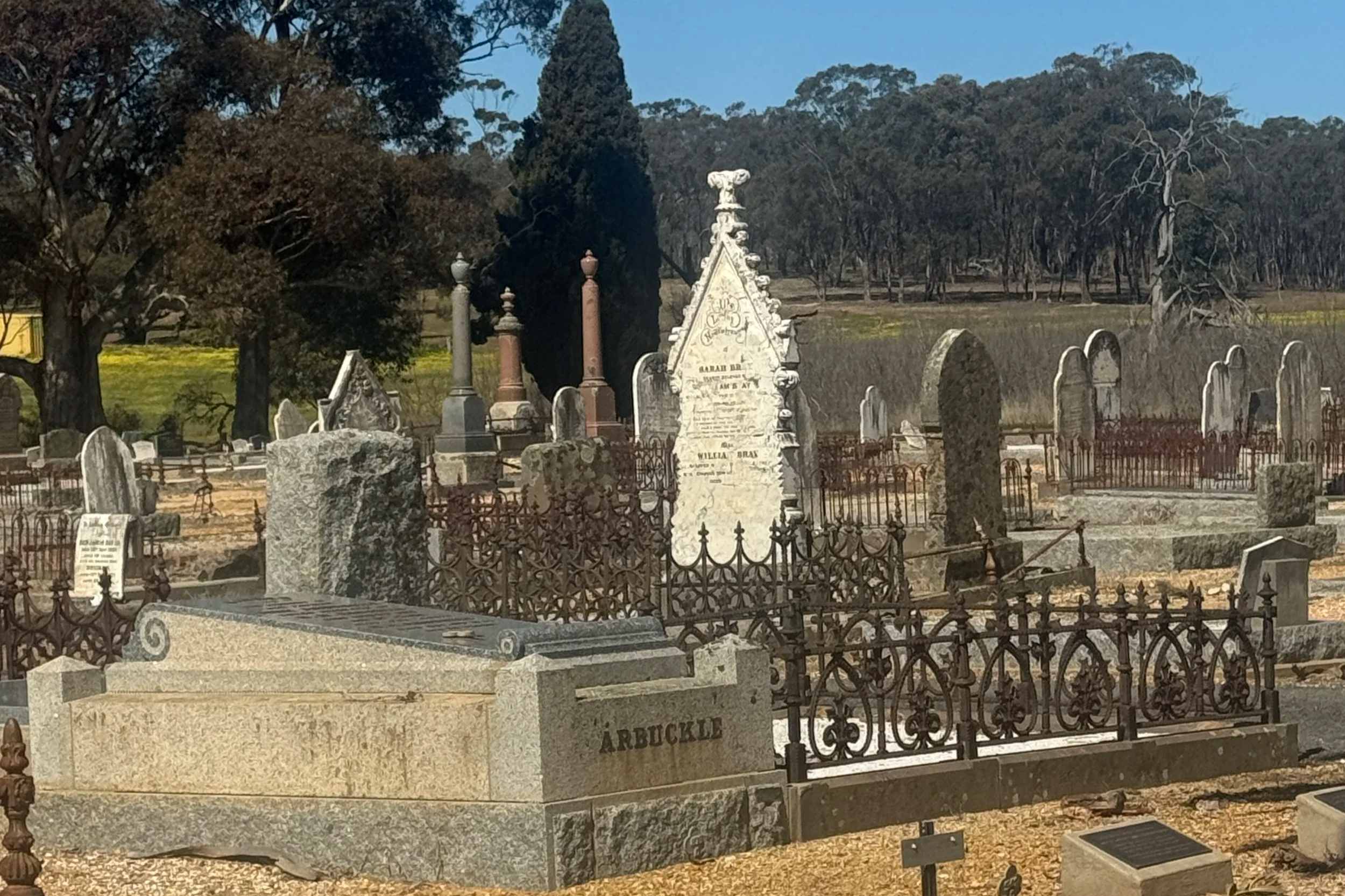
There’s something sad about cemeteries. Not so much about the death, but about how, over time, they become neglected.
Yesterday, I went for a drive with my husband, John. He enjoys genealogy and often receives requests to photograph graves for people researching their family history.
While he was tracking down a few graves at our local St Arnaud cemetery, I took myself off for a wander.
I looked at the gravestones, some old, some newer. Some beautifully maintained, others almost forgotten.
I imagine that when those headstones were first placed, they were chosen with love. Perhaps with great sadness. Perhaps, in some circumstances, even a little relief. After all, not every relationship is a happy one.
But time moves on.
Families move away. Generations grow older and die. Children and grandchildren may never have known the person whose name is engraved on the stone. Sometimes it’s only as we get older that we start to become interested in the past.
And eventually, the flowers and ornaments stop coming.
It made me wonder whether we teach the next generation enough about the people who came before us. Not necessarily to maintain a grave forever, but to understand whose name is there and why they mattered to someone.
Then my thoughts wandered a little further. (I have a happy knack of thoughts dashing here and there.)
We all have to leave this world somehow, and there are now quite a few ways to deal with our bodies after death.
Burial, cremation, alkaline hydrolysis, and even the possibility of returning our bodies to the earth through natural organic reduction — essentially becoming compost.
Which leads me to another question.
What is the best way to leave our loved ones?
And is the way we’ve always done things necessarily the way we should continue?
But that’s a thought for another time. Keep an eye out for my next ramble, where I’ll explore the history of burial and how our choices are changing.
For now, I’ll return to where I began.
John was there photographing graves for people who wanted to know more about their family history. So even though some of those graves may look forgotten, someone, somewhere, is still looking for the person buried there.
There’s something rather lovely about that.